Introduction
The craze for superbikes is growing rapidly across the world these days.
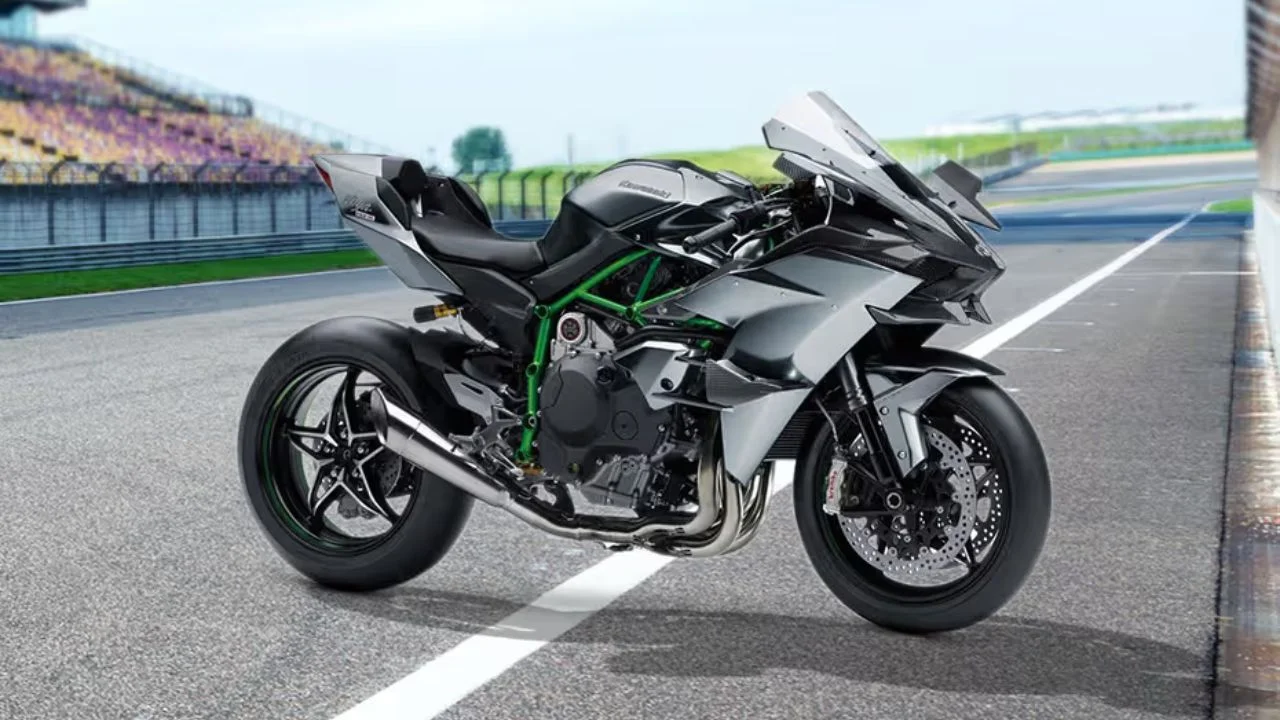
High-performance motorcycles like the Kawasaki Ninja H2R are very popular among bikers due to their extreme speed and advanced technology.
But a common question people often ask about bikes like the Ninja H2R is – is it legal to ride a track-only superbike on public roads?
Track-only superbikes are specially designed for racing circuits.
The main focus of these bikes is maximum performance and speed, so they do not have many road-legal features like headlights, indicators, mirrors, and emission systems.
For this reason, motorcycles like the Kawasaki Ninja H2R are not allowed to be ridden on normal public roads.
These bikes are designed for racetracks, where riders can safely experience their full performance.
In this article, we’ll explain in detail Is it legal to use a track-only superbike like the Ninja H2R on public roads and the reasons behind it.
Are Track-Only Superbikes Legal on Public Roads?
The short and simple answer is: No, track-only superbikes are not legal to ride on public roads.
Bikes like the Kawasaki Ninja H2R are specially designed for racing circuits and do not follow normal road regulations.
There are certain mandatory requirements to legally ride any motorcycle on public roads, such as RTO registration, number plate, headlights, indicators, mirrors, horn and emission compliance.

But track-only superbikes usually do not have these basic road-legal components. This is why government authorities do not approve such bikes for road use.
For example, the Kawasaki Ninja H2R does not have headlights, turn indicators and mirrors, and its exhaust system also does not follow normal road emission standards.
Therefore, it is not possible to get it registered from the RTO, and driving any vehicle on public roads without registration is considered illegal.
If a person still rides a track-only superbike on public roads, they may face heavy fines, vehicle seizure and legal penalties.
For this reason, people who own such bikes use them only at racetracks, private circuits or special motorsport events.
What Happens If Someone Rides a Track Bike on Public Roads?
If a rider attempts to ride a track-only superbike like the Kawasaki Ninja H2R on public roads, they could face serious legal problems.
Because such bikes don’t meet road-legal requirements, they are considered illegal to use in normal traffic.
1. Serious Legal Penalties
The first consequence is heavy traffic fines. In India, if an unregistered vehicle is caught on the road, the traffic police can issue a hefty fine.
In some cases, fines can reach thousands or even lakhs of rupees.
2. Bike Seizure Risk
If authorities determine that a bike is not road-legal, the police can seize it. Because track-only motorcycles are not registered, they are not legally permitted to ride on the road.
3. Insurance Issues
Track-only bikes also do not have normal road insurance. If an accident occurs on a public road, the rider may have to bear the entire financial loss.
Insurance companies may reject the claim in such cases.
4. Road Safety Risks
In addition to legal issues, safety is also a major concern. Track bikes do not have headlights, mirrors, or indicators, which are essential for road riding. This significantly increases the risk of accidents.
That’s why people who own track-only superbikes like the Kawasaki Ninja H2R usually use trailers or transport vans to transport them to the racetrack.
There, riders can safely enjoy the bike’s full performance without any legal problems.
Can You Convert a Track-Only Bike Into a Road-Legal Bike?
Many superbike enthusiasts wonder if a track-only bike can be modified to be road-legal.

Adding the required road equipment to a motorcycle might seem like it could be ridden on public roads. But the practical reality is a little different.
1. Technically Possible
To make a track bike road-legal, some important modifications would be necessary, such as:
- Installing headlights and taillights
- Installing turn indicators
- Adding rear-view mirrors
- Installing a horn and number plate holder
- Installing an emissions-compliant exhaust system
With these changes, the bike could theoretically be closer to road use. But these modifications alone are not enough.
2. Legal Registration Issues
For any motorcycle to be driven on public roads, RTO registration, insurance, and emission certification are mandatory.
Track-only motorcycles, like the Kawasaki Ninja H2R, are not originally designed by manufacturers for road use.
Therefore, they do not normally receive type approval or road-legal certification.
If the bike does not receive official approval, the RTO may refuse to register it. Without registration, no vehicle is legally allowed to be driven on the road.
3. Practical Situation
In practical terms, making track-only superbikes road-legal is almost impossible in most countries. Even if an owner makes modifications, obtaining legal certification is very difficult.
For this reason, bikes like the Kawasaki Ninja H2R are primarily used on racetracks, closed circuits, and motorsport events.
Owners typically transport them to the track via trailer or transport vehicle rather than riding them on the road.
Difference Between Kawasaki Ninja H2 and Ninja H2R
Many people mistake the Kawasaki Ninja H2 and Kawasaki Ninja H2R for the same bike, but in reality, the purpose and design of both motorcycles are quite different.
Both bikes were developed by Kawasaki Heavy Industries, but one is intended for road use and the other for the racetrack only.
1. Legal for Roads
The biggest difference is road legality. The Kawasaki Ninja H2 is a street-legal superbike that you can ride on public roads with proper registration, insurance, and a license plate.
The Kawasaki Ninja H2R is designed exclusively for the racetrack and is not legal to ride on public roads.
2. Performance Level
In terms of power, the H2R is a much more aggressive machine. The Ninja H2R’s engine can produce up to 300 horsepower, while the Ninja H2’s power is roughly around 200 horsepower.
This makes the H2R considered one of the most powerful production motorcycles in the world.
3. Body Design & Aero
The Ninja H2R’s design is designed with pure racing in mind. It features carbon fiber winglets and aggressive aerodynamic parts that improve high-speed stability.
On the other hand, the Ninja H2’s design is sporty and aggressive, but road usability has also been considered.
4. Street Riding Equipment
Road-legal motorcycles must have certain mandatory features. The Ninja H2 includes components such as headlights, indicators, mirrors, a horn, and a number plate holder.
However, the Ninja H2R does not have these features because they are not needed on a racetrack.
5. Riding Purpose
Riders can use the Ninja H2 for daily road riding, highway rides, and occasional track days.
The Ninja H2R is an extreme performance machine specifically designed for use on professional racing circuits and closed tracks.
Why Manufacturers Build Track-Only Superbikes
People often wonder why companies make track-only superbikes when a motorcycle can’t run on public roads.

The reality is that the purpose of such bikes isn’t just sales, but also technology, branding, and motorsports development. Bikes like the Kawasaki Ninja H2R exemplify this philosophy.
1. Engineering and Technology Showcase
Track-only superbikes are an engineering showcase for manufacturers. These bikes allow companies to showcase their most advanced technology and performance capabilities.
Because there’s no pressure from road regulations, engineers can use more powerful engines, aggressive aerodynamics, and lightweight materials.
For example, the Kawasaki Ninja H2R uses a supercharged engine and advanced aerodynamic winglets that provide extreme speed and stability.
2. Racing Technology Development
Motorsport has always been an important source of automobile innovation. Track-only motorcycles give companies the opportunity to test new racing technologies.
Technology that proves successful on the racetrack can later be used in road-legal bikes.
This process provides manufacturers with real-world high-performance testing, which is very useful when developing normal road bikes.
3. Brand Image and Marketing
High-performance track bikes also strengthen brand image. When a company produces the world’s fastest or most powerful motorcycle, it increases both the brand’s reputation and excitement.
These bikes act as halo products, giving the entire brand lineup a premium and performance-focused image.
4. Collector and Enthusiast Market
Some wealthy collectors and motorcycle enthusiasts prefer to purchase exclusive machines that are rare and unique.
Track-only superbikes are produced in limited production, which is why they have a high collector value. Some owners ride such bikes only on racetracks or display them in their private collections.
5. Pure Performance Without Restrictions
Road-legal motorcycles must adhere to safety, emission, and noise regulations. However, track-only bikes do not have these restrictions.
This allows manufacturers to achieve maximum performance and speed.
For this reason, track-only superbikes are considered among the most extreme motorcycles in the world.
Expert Opinion: What Do Motorcycle Experts Say?
According to motorcycle experts and industry professionals, the primary purpose of track-only superbikes is not public road riding, but rather a high-performance racing environment.
Bikes like the Kawasaki Ninja H2R are designed to deliver maximum speed, acceleration, and aerodynamics on a racetrack.
1. Motorcycle Engineers’ Perspective
Motorcycle engineers say that when designing track-only bikes, companies focus on performance and lightweight engineering.
Because these bikes don’t have to adhere to road regulations, engineers can use more powerful engines and advanced aerodynamic components.
For this reason, experts say using such machines on public roads is neither practical nor safe.
2. Professional Racers’ View
Professional racers believe that track-only motorcycles are best ridden in controlled racing environments.
Racetracks are specially designed for high-speed riding, with wide corners, safety barriers, and proper riding space.
Public roads have traffic, pedestrians, and unpredictable situations, which are not suitable for extreme performance bikes.
3. Safety Experts’ Opinion
Safety experts believe that road vehicles must have certain essential safety components, such as headlights, mirrors, indicators, and regulated exhaust systems.
Track-only motorcycles often lack these features, making them risky to ride on public roads. For this reason, governments and transport authorities do not grant road-legal approval to such bikes.
4. Industry Consensus
There is a general consensus in the motorcycle industry that track-only superbikes are best used on racetracks.
Therefore, experts recommend that if a rider wants to experience a high-performance motorcycle, they should participate in racetrack riding events or professional track days, where such machines can be ridden safely and legally.
Conclusion
Track-only superbikes like the Kawasaki Ninja H2R are specially designed for racetracks and are not legal to ride on public roads.
These bikes do not have many mandatory road features like headlights, indicators, mirrors and emission compliance, due to which they do not even get RTO registration.
For this reason, if a rider rides such a bike on a public road, he may have to face legal penalties and heavy fines.
The real purpose of track-only superbikes is to provide extreme performance experience on the racetrack, whereas for road riding, street-legal superbikes like the Kawasaki Ninja H2 are a better option.
Read More:
FAQs
1. Is the Kawasaki Ninja H2R legal on roads?
No, the Kawasaki Ninja H2R is not legal for public roads. It is a track-only motorcycle designed specifically for racing circuits.
2. Is Ninja H2R track-only?
Yes, the Kawasaki Ninja H2R is a track-only motorcycle. It is designed specifically for racetracks and high-performance riding, which is why it is not approved for public road use.
